

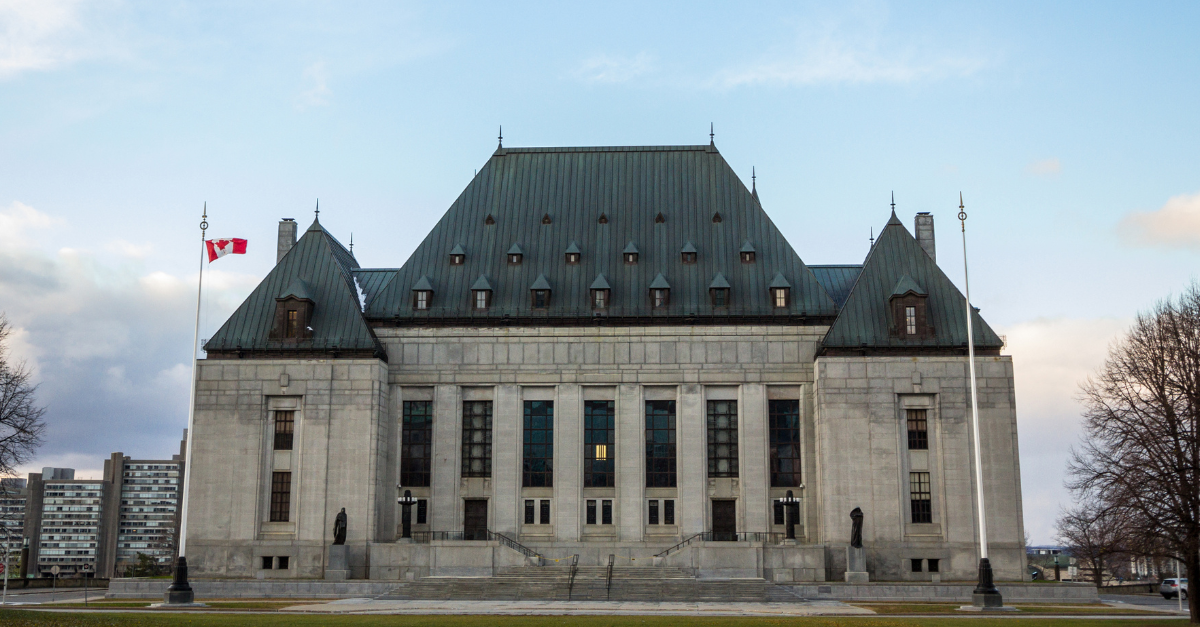


1In a recent decision, Democracy Watch v. Canada (Attorney General),1 the Supreme Court of Canada unanimously held that the court’s core supervisory jurisdiction on judicial review is constitutionally protected by s. 96 of the Constitution Act, 1867, and any privative clause that purports to completely bar the court from exercising that jurisdiction is unconstitutional. The Court also provided clarity on the discretionary nature of judicial review, including the court’s power to decline relief where there are adequate alternative remedies available.
Background
In May 2021, the Conflict of Interest and Ethics Commissioner (the “Commissioner”) released a report in which he concluded the Prime Minister had not contravened the Conflict of Interest Act2 by participating in two funding decisions relating to the WE Charity. Democracy Watch, a public interest organization, applied for judicial review of the Commissioner’s decision; however, the Federal Court of Appeal dismissed the application on the basis there were adequate alternative “political” remedies available. Also, at issue was whether Parliament had ousted the court’s jurisdiction of judicial review pursuant to s. 66 of the Conflict of Interest Act, a privative clause which provided that:
66 Every order and decision of the Commissioner is final and shall not be questioned or reviewed in any court…
The Supreme Court allowed the appeal, finding (1) the Conflict of Interest Act did not provide an adequate alternative remedy to Democracy Watch, and (2) s. 66 was unconstitutional to the extent it purported to oust legality review on questions of fact and law.
Constitutional Basis for Judicial Review
The Court began by setting out the constitutional basis for judicial review in Canada. Pursuant to the rule of law, public power must be exercised pursuant to legal authority and within the bounds of law, including the Constitution.3 A core function of our judiciary is to supervise the exercise of public power through judicial review.
The Court held that the Constitution Act, 1867 guarantees a right to legality review over all exercises of public power, and “every aspect” of an administrative decision.4 The Court explained:
[71] …Where an administrative decision-maker acts in an official capacity and exercises a delegated power, it does not matter whether that exercise of power concerns questions of fact, of law, of fairness, or any other issue… What matters, for constitutional purposes, is that the courts are constitutionally empowered to supervise the exercise of delegated power to ensure it respects the boundaries of its inherent limits.
[emphasis added.]
Therefore, where a statute contains a privative clause that purports to limit any aspect of the court’s core supervisory jurisdiction on judicial review, that provision is ultra vires and may be declared to be of no force and effect.5 However, legislatures may still validly limit judicial review within these constitutional bounds, for example, by imposing time limits for judicial review or by mandating a standard of review (i.e. requiring the court to afford more or less deference). Simply put, legislatures can limit how the court reviews administrative decisions but cannot oust the court’s jurisdiction entirely.
Adequate Alternative Remedies
While those with standing have a constitutional right to apply for judicial review, the court’s decision to grant relief is discretionary. For example, courts may decline to grant relief where the applicant has an “adequate alternative remedy” to judicial review, such as a statutory appeal, a reconsideration process, or a grievance procedure.
For an alternative remedy to be adequate, it does not need to be identical to the remedies available on judicial review.6 Rather, the remedy must be adequate to address the applicant’s concern, such that judicial review is unnecessary to vindicate the applicant’s rights.7 In considering this issue, courts must give proper consideration to the advantages of each forum, and importantly, their accessibility to the applicant.
In this case, the Federal Court of Appeal had found that the “political oversight” provided for in the Conflict of Interest Act was an adequate alternative to judicial review. The Supreme Court disagreed, because the Conflict of Interest Act did not provide any recourse for Democracy Watch “to ask Parliament, or anyone other than the courts, to review the Commissioner’s report”.8 Put another way, there was no alternative available to Democracy Watch to obtain the relief it sought: a legality review of the Commissioner’s report.9
Takeaways
The Democracy Watch decision will have a profound impact on administrative law in Canada. The Court’s holding that legislatures cannot constitutionally place public power and administrative decisions outside the court’s core supervisory jurisdiction is momentous. We anticipate this decision will lead to significant challenges to privative clauses currently in place throughout Canada.
If you require additional information or further assistance, please contact Menka Sull, Lindsay Morgan, or a member of our Administrative + Public Law Practice Group.
1 2026 SCC 28 [Democracy Watch]
2 S.C. 2006, c. 9, s. 2
3 Democracy Watch, at para. 1.
4 Ibid, at para. 76.
5 Ibid, at para. 76.
6 Ibid, at para. 19.
7 Ibid, at paras. 19–20.
8 Ibid, at para. 31.
9 Ibid, at para. 34.



 Subscribe to RSS Feed